
Select location

Select location

Every year, the same debate pops up at iftar tables and family gatherings: Rooh Afza vs Jam e Shirin. Both are iconic, turn a simple glass of water into something festive, and have serious nostalgia attached. But if you’ve ever stood in front of the fridge wondering which bottle to pour first, this guide will help you decide based on taste, texture, mixing style, and when each one shines. And because many people specifically look for a ramadan sharbat that feels refreshing after a long fast, we’ll also talk about what works best at iftar, what tastes best with water versus milk, and how to make each one feel special with simple add-ins you already have at home.
The reason Rooh Afza vs Jam e Shirin is such a classic comparison is that both sit in the “rose-style sharbat” space, but they don’t taste identical. Their sweetness level, fragrance, and overall “feel” in the mouth can be different depending on how you mix them and how cold your drink is.
It also becomes a practical question when you’re shopping for the season:
By the end, you’ll know exactly how to pick based on your preference—and how to serve either one in a way that gets everyone asking for a refill.
When people say Rooh Afza vs Jam e Shirin, Rooh Afza is often the first name that comes up because it’s the “classic” for many households. The flavour is typically described as floral-forward, fragrant, and comforting—especially when mixed into milk.
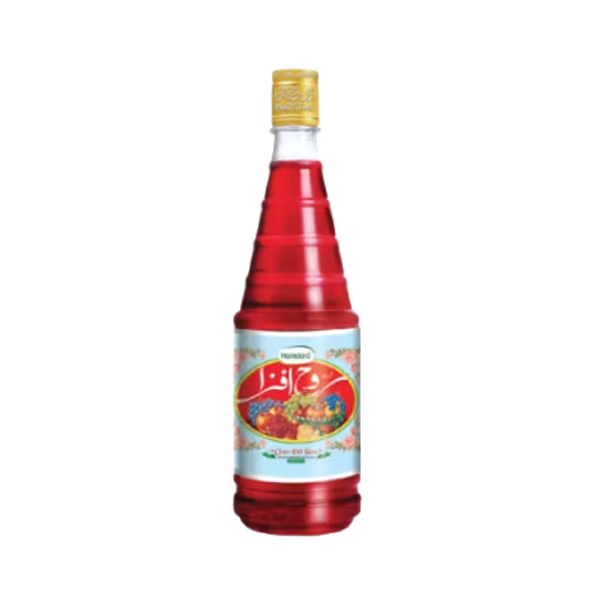
In cold water, Rooh Afza gives a sweet, perfumed sip that feels instantly familiar. If you like a strong aroma, you’ll probably lean towards Rooh Afza in the Rooh Afza vs Jam e Shirin debate. It also tends to “feel” richer, so a little can go a long way—especially if your water is properly chilled.
This is where Rooh Afza often becomes the easy winner in Rooh Afza vs Jam e Shirin for many families. In milk, the flavour feels rounder and more dessert-like. If you love a creamy ramadan sharbat, Rooh Afza with milk can be comforting after iftar, especially when served extra cold.
To make it feel “special” without turning it complicated:
On the other side of Rooh Afza vs Jam e Shirin is Jam e Shirin—often described as a bit brighter, with a slightly tangier edge that many people find more “thirst-quenching” in water. If you prefer a sharbat that feels crisp and a little less perfumed, Jam e Shirin is usually the pick.
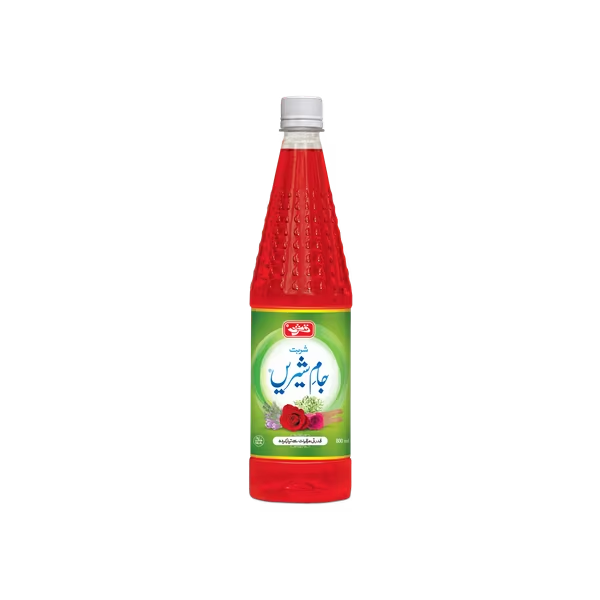
If your ideal Rooh Afza vs Jam e Shirin outcome is “maximum refreshment,” Jam e Shirin often feels lighter in plain water. It can come across as more lively, especially when you add plenty of ice and serve it in a tall glass.
A simple upgrade that works beautifully as a ramadan sharbat:
Jam e Shirin also works in milk, but the result can feel different from Rooh Afza’s creamy vibe. For some people, Jam e Shirin in milk tastes fresher and less heavy. For others, it’s not as “dessert-like,” which is exactly why they prefer it—especially during warmer nights in Ramadan. If you want a lighter milk sharbat, Jam e Shirin can be your choice.
Most Rooh Afza vs Jam e Shirin debates get stuck on “which is better,” but the better question is “better for what?”
This is why Rooh Afza vs Jam e Shirin can split families: one side wants that classic floral hit, the other side wants a cleaner finish.
For a daily summer sharbat in Karachi or Lahore heat, many people lean towards the one that feels lighter. For a more indulgent ramadan sharbat at home, others prefer the richer feel.
So if you’re deciding Rooh Afza vs Jam e Shirin for Ramadan, think about your family’s habits: are you mostly making water sharbat at iftar, or do you love a creamy drink after prayers?
Here’s a practical way to settle Rooh Afza vs Jam e Shirin without overthinking it:
Both can absolutely work as a ramadan sharbat. The “winner” is the one that fits the moment.
A lot of sharbat disappointment happens because of mixing—too much syrup, not enough cold water, or not enough ice. Here are simple rules that make either one taste better:
Sharbat tastes best when the base is properly chilled. If you can, chill your water or milk before mixing. This instantly improves Rooh Afza vs Jam e Shirin comparisons because you’re tasting them at their best.
This helps the syrup mix smoothly. If you add ice first, the syrup can sink and you’ll end up stirring for too long.
A good ramadan sharbat should refresh you, not feel sticky-sweet. Start with less syrup, taste, then adjust. This is especially useful when you’re doing a side-by-side Rooh Afza vs Jam e Shirin test for the family.
You don’t need fancy ingredients to level up your glass:
At the end of the day, your drink of choice is just a preference. Rooh Afza brings bold floral comfort, especially in milk. Jam e Shirin brings bright, chilled refreshment, especially in water. If you’re planning a ramadan sharbat menu, you can even rotate them across the week and keep everyone happy.
Whichever side of Rooh Afza vs Jam e Shirin you’re on, the real win is a cold glass at the right time—served with care, properly mixed, and enjoyed with family.
If you’re stocking up for the season, you can order your favourite pick on Bazaar and skip the last-minute rush. Shop directly on Bazaar and keep your fridge ready for guests, iftar, and late-night cravings. Or, if you already know you’re building a full sharbat setup for the month, go straight to the Syrups Category to find what you need for a proper ramadan sharbat routine.